Meaning
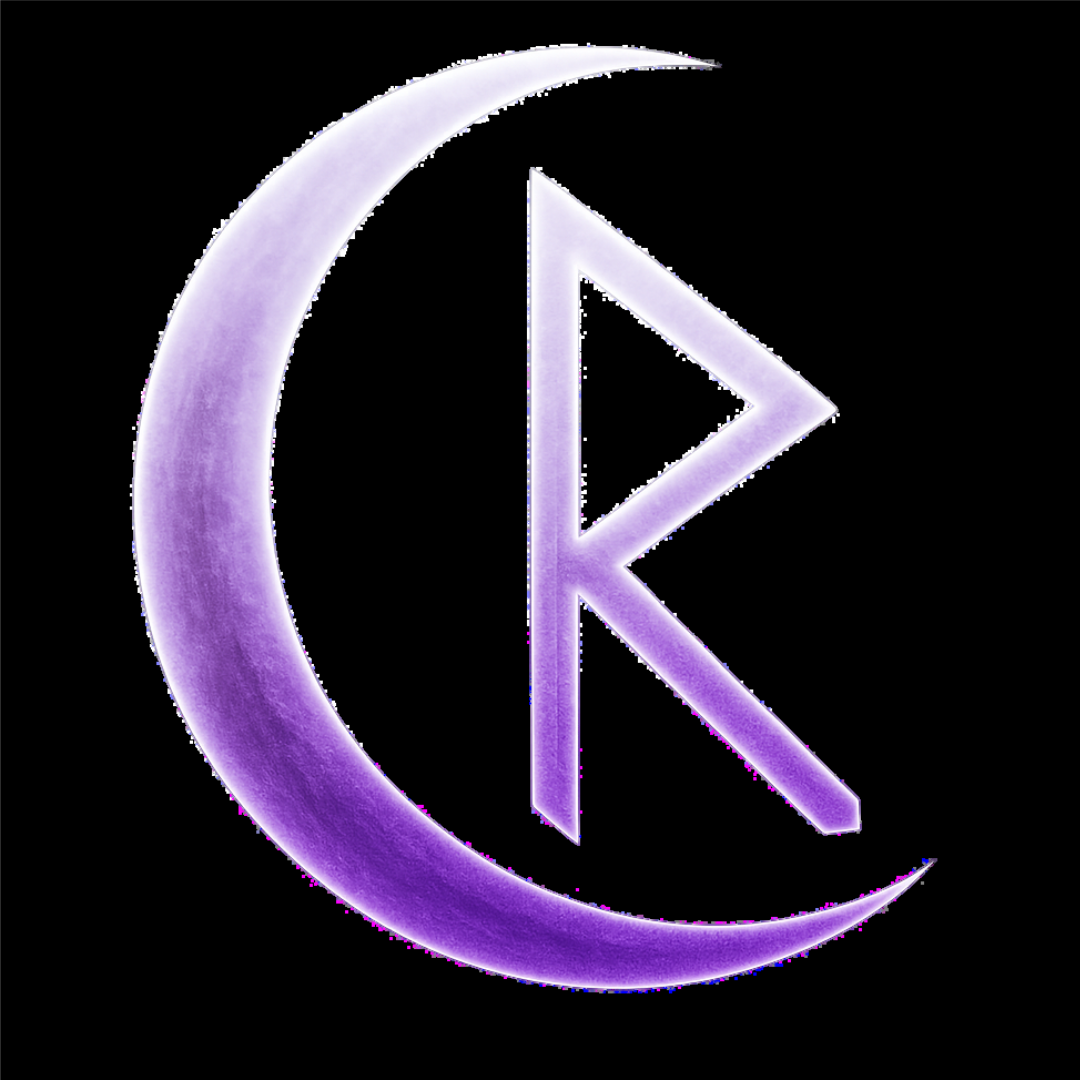
Ehwaz means “horse” in Old Norse. But this rune speaks far beyond the animal: it embodies the most intimate alliance a Nordic community knew — that between a warrior and his mount. The horse was not merely an object of possession. It was an ally who bore your weight, trusted you despite fear, obeyed invisible signals from heels and bodyweight. In return, the rider guarded its safety, rest, hunger. This was reciprocity of the flesh.
When Ehwaz appears in a reading, it speaks to movement that exists only through mutual agreement. It is not just your strength alone that moves forward — it is the alloy of two forces who accept marching in unison. It evokes progress born from trust: when you stop checking at every moment if the other will betray you, you can finally move together.
Ehwaz also embodies the archetype of loyalty. It speaks of one who remains, who does not leave even when the road becomes difficult. It invites recognizing that there are bonds more than contracts — connections where each accepts vulnerability. This is why it is a rune of serious commitment: that of couple, comrade, partner in whom you place real weight.
But Ehwaz also reminds us that this harmonious movement requires awareness. You cannot whip a horse and expect loyalty. You cannot fear your partner and build a project together. It asks: are you a good rider? Do you know the limits of the other, their fears, their needs?
Reversed Meaning
Reversed Ehwaz tells the story of a broken alliance. While its upright form speaks of trust riding together, the reversal describes a rupture — that of trust, mutual respect, or simply movement. It may signal a relationship crumbling, two people no longer marching in unison, each pulling toward their own goals.
Reversed, it can also speak of inertia — an alliance once meaningful but now sclerotic. There is a habit of the bond, but life has left the connection. The horse does not move because the rider has dropped the reins, or simply because both have ceased to understand each other.
It may also reveal a form of loyal rupture: sometimes two forces can no longer ride together, and this reality must be named. This reversal is not a curse — it is an invitation to recognize when an alliance is no longer alive, and find the courage to redefine or leave it.
Keywords
| Polarity | Keywords |
|---|---|
| Upright | Harmonious movement, cooperation, loyalty, mutual trust, partnership, commitment, shared progress, alliance, reciprocal vulnerability, respect |
| Reversed | Broken trust, inertia, misalignment, mistrust, sclerotic alliance, isolation, loss of common direction |
When this rune appears in a spread
In daily reading, Ehwaz reminds you to check your current alliances — not to worry but to notice where you are advancing together and where something has slowed down. It may also invite seeking an alliance that is missing, a collaboration that would advance your project.
In past/present/future readings, Ehwaz in the past describes a fruitful period of union, an alliance that bore fruit. In the present, it says: movement exists now through partnership. You can move forward if you accept trust. For the future, it promises entry into a phase of cooperation, a meeting that will allow you to go further. Reversed at these positions, it signals weakened alliances, ongoing ruptures, or a period where you must learn to advance alone before riding with someone again.
In practical casting (love, work, inner life), upright Ehwaz encourages constructive trust: offer loyalty first and see if it is received. It speaks of creating space for the other to breathe while remaining present. Reversed, it asks: “Who no longer follows me? Where have I ceased to feel the presence of the other?” This is an invitation to dialogue, not judgment.