Meaning
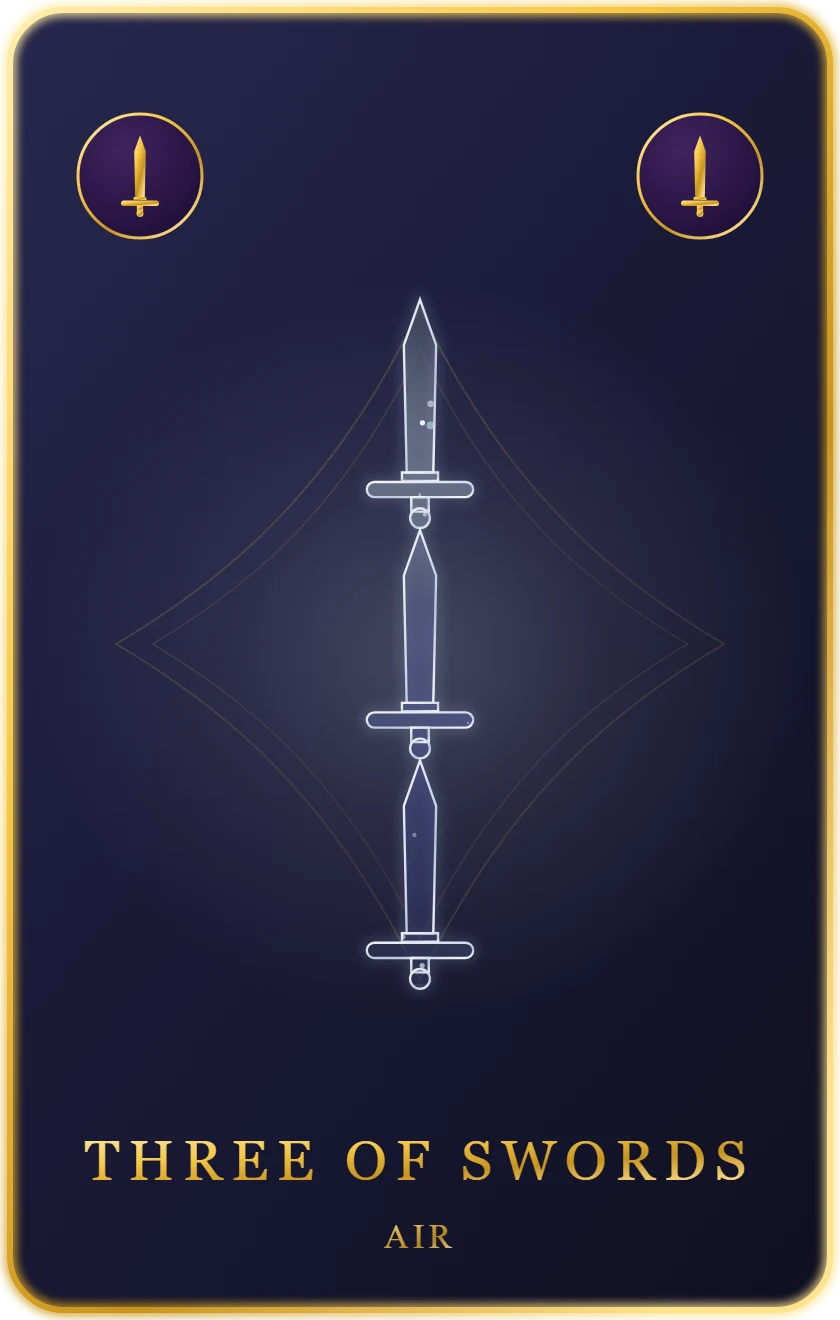
The Three of Swords is one of the 22 Major Arcana cards in the Tarot de Marseille. It evokes deep sorrow, cognitive rupture, and mental mourning. Its traditional iconography depicts three swords plunged into the ground, symbolizing psychic wounds inflicted by a traumatic event. The dark colors of the swords and background evoke the darkness of grief.
From an esoteric perspective, this card also calls to mind the delicate alchemy necessary for transformation after significant loss. Like in myths of rebirth following widowhood, sorrow is often a precursor to transformation.
In modern collective and individual imagination, the Three of Swords represents a painful experience that fractures our perception of the world and ourselves. It invites a moment of mental mourning, essential for rebuilding oneself after loss or rupture.
Inverted Meaning
When inverted, the Three of Swords evokes persistent rumination on sorrow that prevents mourning and reconstruction. Rumination keeps one trapped in past suffering, endlessly reliving it. This can also be a form of denial, disbelief at the loss.
This inverse interpretation offers a warning: the risk of drowning in one’s own grief, perpetuating it rather than facing it and transforming through it. It invites recognition of the blocks preventing movement toward a new stage.
Keywords
| Polarity | Keywords |
|---|---|
| Upright | Sorrow, cognitive rupture, mental mourning, transformation, post-traumatic rebirth |
| Reversed | Rumination, perpetual suffering, denial, disbelief |
When this card appears in a reading
The appearance of the Three of Swords in a reading often signals deep mental disturbance and profound sorrow for the querent. It may indicate a difficult cognitive rupture to accept, such as significant loss or upheaval.
In an amorous context, it generally evokes intense heartbreak that troubles one’s psyche and greatly disrupts daily existence. It can also signify separation, divorce, widowhood.
When positioned in the heart or cross, the Three of Swords often indicates deep emotional wounds and the necessity for a mourning process to rebuild oneself.
Related Cards
- Two of Swords
- Queen of Cups