Meaning
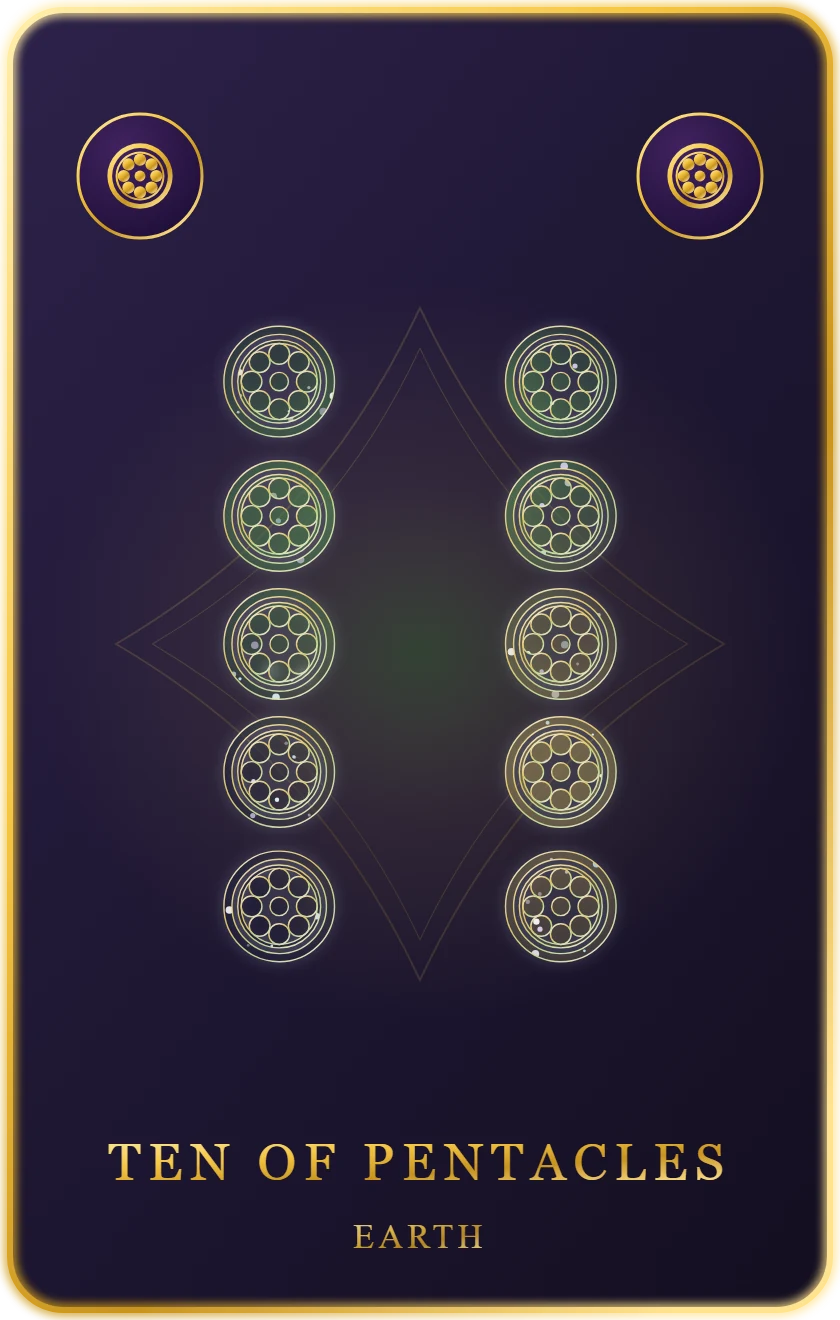
The Ten of Coins is one of the oldest illustrations in Tarot, dating back to medieval illuminations. It depicts a man dressed in a tunic, sitting on a tree trunk and counting his coins. Behind him, a village and cultivated fields can be seen.
In its upright meaning, the Ten of Coins evokes material and immaterial heritage passed down through generations. This card invites reflection on how ancestral experiences, knowledge, and values have shaped one’s own existence. It also symbolizes the legacy that is gathered throughout life to pass on to future generations.
Symbolically, this figure recalls alchemy and the quest for inner gold. Like in ancient legends, counting coins equates to measuring what one truly possesses: not only money but also experiences, knowledge, and moral heritage.
In our contemporary context, the Ten of Coins can be read as an invitation to reconsider the value of time spent, experiences lived through, and learnings regardless of their form and nature. It is also a card that reminds us of the importance of passing on what has been received and acquired throughout one’s life.
Meaning Reversed
The reversal of the Ten of Coins may evoke family conflicts around heritage or difficulty in accepting received legacies. It can also symbolize reluctance to share wealth, whether material or immaterial.
In this context, the reversed Ten of Coins is a call for self-awareness and personal work. It invites exploring emotional blockages that might hinder the transmission of a healthy and balanced legacy, as well as fears or frustrations related to possession and sharing.
Keywords
| Polarity | Keywords |
|---|---|
| Upright | Legacy, lineage, transmitted heritage, counting one’s money, inner alchemy, values transmission |
| Reversed | Family conflicts, reluctance to share, emotional blockages, fears linked to possession |
When This Card Appears in a Reading
The appearance of the Ten of Coins in a reading is often a sign that it’s time to examine one’s heritage and its personal and potential impact. It can also indicate the need to address questions related to legacy, property, or transmission.
In relational contexts, it might mean that experiences, learnings, and values passed down by ancestors have a strong influence on one’s own life. It may also suggest the necessity of connecting with this chain of unity to better understand current paths.
In professional contexts, the Ten of Coins can evoke questions about legacy, fees, or inheritance in a work setting. More broadly, it can symbolize career accumulations and how they might be shared or passed on.
Related Cards
- The Star
- The World