Meaning
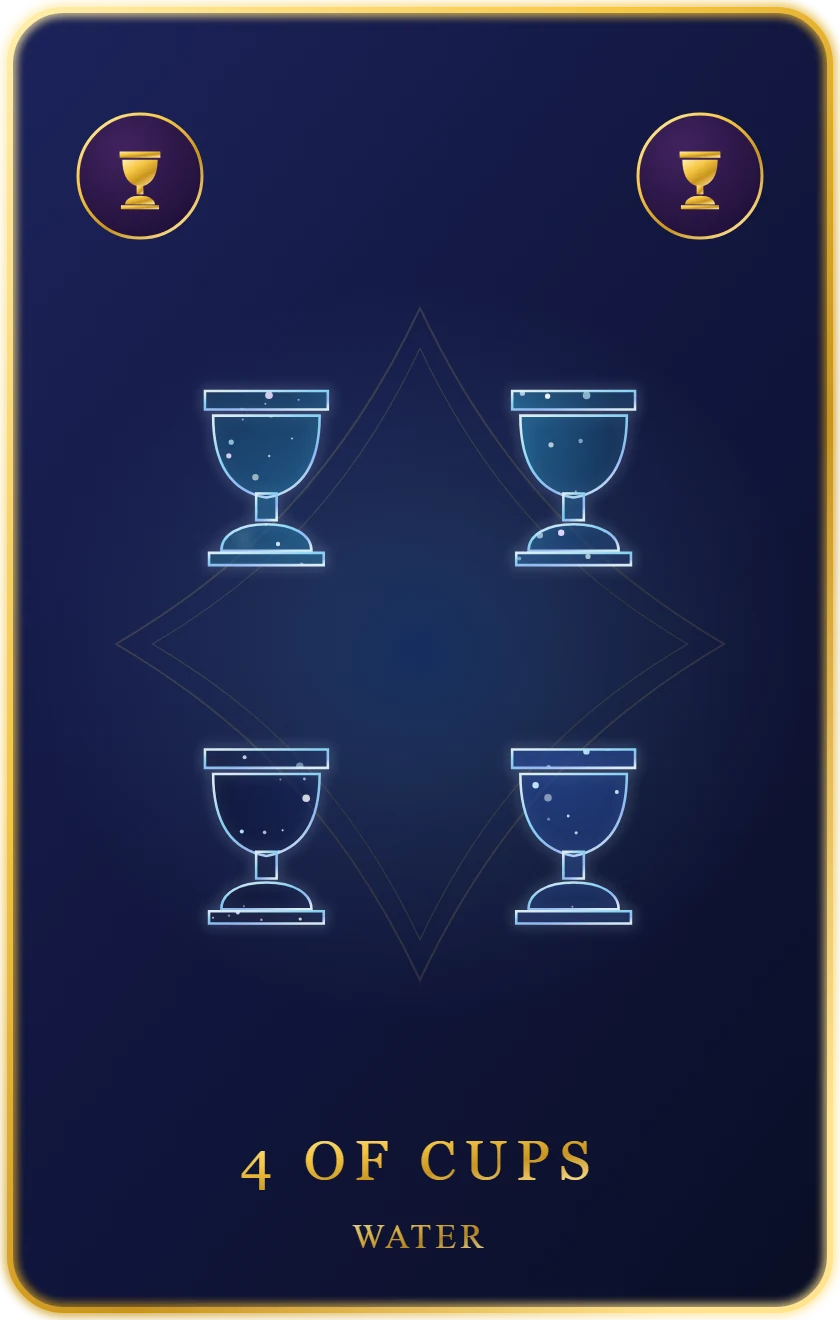
The Four of Cups, also known as the Wheel of Fortuna, represents the archetype of lassitude and disenchantment. In this traditional Marseille Tarot card, a woman is seated at the center of a wheel adorned with empty chalices, symbols of emptiness and disappointment. The figure is usually depicted facing away, emphasizing her inward retreat and detachment from existence.
The underlying alchemical and hermetic art in this image highlights the cycle of iron: beginning, flowering, decline. The fleeting quest for plenitude inevitably ends with a return to origins, to the original void. Like the moon on its inevitable journey, we are all travelers on this mysterious wheel, always seeking a center that we can never reach.
In our contemporary world, the Four of Cups evokes a period of empty inspiration and the necessity of sincere introspection. It is an opportunity to break free from illusions accumulated in previous cycles, to better embark upon a new beginning with a clearer mind.
Reversed Meaning
When it appears reversed, the Wheel of Fortuna takes on a melancholic and static tone. The woman seems withdrawn into herself in a dreary apathy, her gaze lost elsewhere. The empty chalices no longer reflect merely material emptiness but also emotional voids.
This interpretation highlights moments when life feels insipid and devoid of flavor. It may indicate a form of depression or burnout from routine, an indifference towards usual activities. Reversed Four of Cups invites the acknowledgment and allocation of time to these strange feelings that scare us yet are necessary.
Keywords
| Polarity | Keyword |
|---|---|
| Upright | Lassitude, introspection, disenchantment, withdrawal, contemplation |
| Reversed | Dreary retreat, fixed melancholy, burnout, routine, depression |
When this card appears in a reading
The Four of Cups upright may indicate the end of an enriching period. It invites sincere introspection to better embark upon a new beginning with a clearer mind.
In reversed readings, it can signify a withdrawal into oneself or a fleeting form of depression, indicating that the querent is going through a dreary and difficult phase. It underscores the importance of acknowledging these strange feelings that may be frightening but are necessary.